Retro Biosciences Reaches $1.8 Billion Valuation in Latest Longevity Fundraise
Sam Altman-backed longevity startup Retro Biosciences has disclosed a $1.8 billion valuation from its most recent fundraise, cementing its position as one of the most richly valued private longevity companies globally.
LONGEVITYINDUSTRY
Editor
5/28/20261 min read
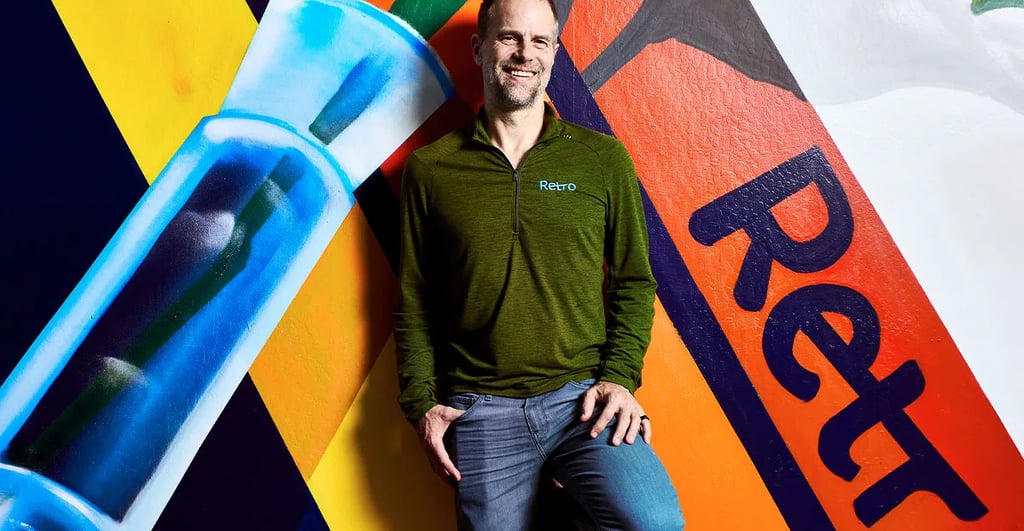

Retro Biosciences, the longevity biotech backed by OpenAI CEO Sam Altman, has announced that its latest fundraise values the company at $1.8 billion, according to a report published by STAT News. The company did not disclose the size of the new round or its lead investors, but the valuation represents a significant step up for a firm that has positioned itself at the frontier of human healthspan extension.
The company's central mission is to add ten healthy years to the average human lifespan. To pursue that goal, Retro Biosciences is pursuing a portfolio of biological technologies, spanning cellular reprogramming, autophagy, and plasma-based interventions. Its approach is multidisciplinary rather than single-target, reflecting a bet that longevity will require attacking ageing through several mechanisms simultaneously.
Sam Altman's involvement has been central to Retro's public profile and its ability to attract capital. The company operates outside the traditional venture funding model for some of its activities, drawing from a network of high-net-worth and strategic backers aligned with the longevity investment thesis. The $1.8 billion valuation places Retro among a small group of longevity-focused biotechs — including Altos Labs and Unity Biotechnology — that have secured nine-figure valuations before generating commercial revenue.
For the men's health and longevity sector, the Retro milestone carries clear signal value. Male longevity — driven by interest in testosterone optimisation, metabolic health, cardiovascular resilience, and cognitive preservation — represents a growing and commercially active subset of the broader longevity market. A $1.8 billion private valuation in this space indicates that institutional and strategic capital views longevity not as fringe science but as a fundable, scalable category.