Legacy commits $1M to clinical study validating at-home sperm collection for assisted reproduction
Male fertility platform Legacy has launched a $1 million clinical study — the Sperm Study — to validate the use of at-home semen collection samples in assisted reproduction technology procedures, a step that could lower access barriers for men undergoing fertility treatment.
FERTILITY
Editor
5/14/20261 min read

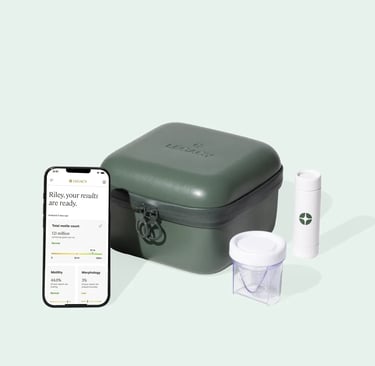
Legacy, a male fertility company offering at-home sperm testing and cryopreservation services, announced on 11 May 2026 the launch of a $1 million clinical study examining the viability of at-home semen collection for use in assisted reproduction technology (ART). The study, referred to as the Sperm Study, positions Legacy as actively working to close the gap between its consumer-facing testing platform and the clinical requirements of fertility medicine.
Legacy describes itself as the leading male fertility clinic and at-home sperm testing and cryopreservation platform. Its core offering enables men to collect sperm samples at home, ship them to a laboratory for analysis, and store them for future use — eliminating the need for clinic visits at the collection stage. The company targets men seeking fertility preservation due to age, medical treatment, or lifestyle factors, as well as couples in the early stages of fertility evaluation.
The Sperm Study is designed to assess whether sperm collected via Legacy's at-home method meets the clinical quality thresholds required for ART procedures such as IVF and IUI. The $1 million investment is entirely company-funded based on available source material, with no external co-sponsors or institutional partners mentioned at launch. The scale of the study — including participant numbers and timeline — was not disclosed in the announcement.
Male fertility has historically been underserved within reproductive medicine: clinical protocols typically centre on the female patient, and male-factor infertility often goes undiagnosed or untreated until couples are already engaged with IVF providers. If Legacy's study demonstrates clinical equivalence for home-collected samples, it could meaningfully reduce the procedural burden for men, strengthen the case for insurance coverage of male fertility services, and accelerate the company's integration into clinical ART workflows. The announcement reflects a broader trend of consumer fertility platforms building toward institutional validation as a route to clinical and commercial scale.